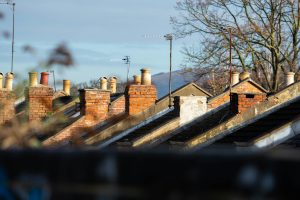
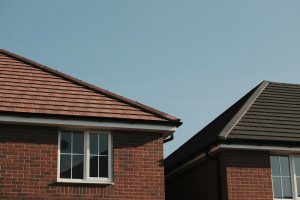
The basic hip roof is a pitched roof with four sloping sides that meet at a central ridge. It is one of the most common roof types in the UK, found on everything from Victorian terraces to modern new-builds.
But the standard hip roof is not the only option. There are several variations, each with different characteristics, costs, and advantages. This guide walks you through the six most common types.
What Is a Hip Roof?
A hip roof is defined by its four sloping sides that all meet at a ridge or a single point at the top. Unlike a gable roof, which has two sloping sides and two vertical ends, a hip roof slopes on all four sides. This gives it a compact, sturdy appearance and makes it more resistant to wind damage.
Hip roofs are particularly popular in areas with high winds or extreme weather because their aerodynamic shape allows wind to pass over the roof rather than catching against a flat gable end.
Types of Hip Roofs
There are six main types of hip roof commonly found in the UK. Each has distinct characteristics that make it suitable for different building types and architectural styles.
1. Simple Hip Roof
The most common type. Four sides slope downward from a central ridge to the walls. The two longer sides are trapezoidal and the two shorter sides are triangular. This is the standard hip roof you will see on most UK homes.
2. Cross-Hipped Roof
Two hip roofs joined at right angles, forming an L or T shape. Common on larger properties or homes with extensions. The valleys where the two roof sections meet require careful flashing to prevent leaks.
3. Half-Hip Roof (Jerkinhead)
A hybrid between a gable and a hip roof. The gable ends are partially clipped, creating small triangular hip sections at the top. This gives more headroom in the loft than a full hip roof while still offering better wind resistance than a standard gable.
Advantages of Hip Roofs
- Excellent wind resistance due to the aerodynamic shape
- Self-bracing structure that is inherently strong and stable
- Consistent eaves on all four sides provide even protection from rain
- Suitable for adding dormers to create extra living space
- Works well with guttering systems as water runs off evenly
Disadvantages of Hip Roofs
- More expensive to build than gable roofs due to the complex structure
- Less loft space compared to a gable roof of the same footprint
- More seams and joins where hip ridges meet, increasing potential leak points
- Require more roofing materials than a gable roof
Hip Roof Costs in the UK
The cost of a hip roof depends on the size of the property, the roofing materials used, and the complexity of the design. As a rough guide, a new hip roof on a typical 3-bedroom semi-detached house costs between £5,000 and £12,000 including materials and labour.
Re-roofing an existing hip roof (replacing tiles or slates without changing the structure) typically costs between £3,000 and £7,000. Prices vary significantly by region, with London and the South East generally 20-30% more expensive than the North.
When to Choose a Hip Roof
A hip roof is a good choice if you live in an area with high winds, want a traditional appearance, or are building a bungalow or single-storey extension. They are also a solid choice if you plan to install solar panels, as the four sloping sides give you options for south, east, or west-facing panels.
If maximising loft space is your priority, a gable roof may be a better option. But for overall structural strength and weather resistance, hip roofs are hard to beat.